Essential Electric Circuit Icons for Modern Design
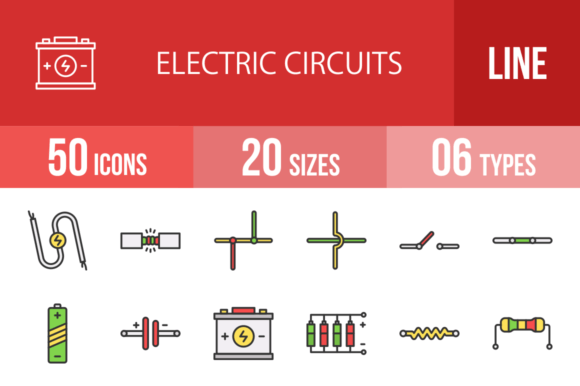
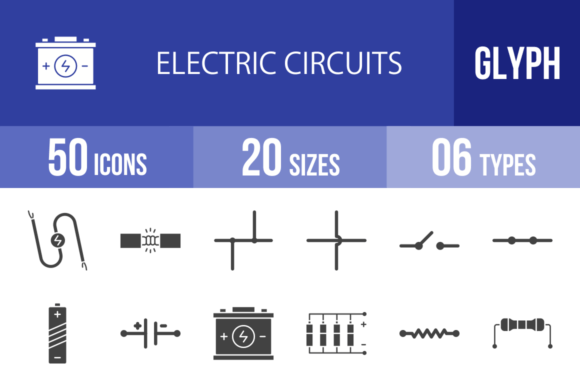
If you are building a technical presentation, developing an educational app, or creating safety signage for a workshop, the difference between a confusing diagram and a clear instruction often comes down to the graphics. We often spend hours searching for the perfect stock photo or illustration, only to find that the style clashes with our project or the resolution is too low for print. This is where a dedicated set of vector assets becomes invaluable. Specifically, having a comprehensive library of Electric Circuits Glyph Icons allows you to communicate complex technical concepts with immediate visual clarity.
Visual Style and Personality
The strength of this collection lies in its adherence to the unigrid system. For those unfamiliar with the term, this means every single icon is built on the same geometric foundation. Whether you are looking at a simple Wire or a complex Operational Amplifier, the visual weight, line thickness, and padding are perfectly consistent. This is crucial for professional design because it ensures that when you place a Battery next to a Switch, they feel like they belong to the same family. There is no visual noise or stylistic clash.
Because these are 100% vector icons, they offer a clean, technical aesthetic that leans towards modern minimalism. They aren't overly ornate or skeuomorphic; they are functional glyphs designed for maximum usability. This style works exceptionally well in environments where clarity is paramount, such as user interfaces (UI) for mobile apps or high-density data sheets. The personality of the set is authoritative yet approachable—it tells the user, "We know the technical details, and we are presenting them to you clearly."
Real-World Applications: From Print to Pixels
One of the most significant advantages of a versatile icon pack is the sheer breadth of application. As a designer or content creator, you are likely working across multiple mediums. Here is how this specific set of Electric Circuits Glyph Icons fits into various workflows:
- Mobile Apps and Web Design: If you are designing a UI for a home automation system or an educational physics tool, you need icons that scale. Because these are vectors, you can use the Smart Home related icons (like Lamps, Switches, and Power Packs) at 16px for a navigation bar or 500px for a hero section without losing a single pixel of quality. The SVG format is particularly useful here for fast loading times and responsiveness.
- Editorial and Educational Publishing: For bloggers and publishers writing about engineering, physics, or DIY electronics, these icons serve as perfect visual anchors. Instead of describing a Wheatstone Bridge or a Series Circuit in a wall of text, you can drop in a Lamps in Series icon to break up the text and aid comprehension.
- Print and Packaging Design: The inclusion of high-resolution formats ensures that if you are creating a user manual for a hardware product or packaging for an electronics kit, the icons will print with crisp, sharp edges. The Resistor, Diode, and Transistor icons are essential for any technical documentation.
Practical Guidance for Designers and Creators
When integrating these assets into your brand identity or project, consider the context of the symbols. The pack includes a wide range of components, from basic elements like Wires and Connections to logic gates like AND Gate, NAND Gate, and XOR Gate. This variety allows you to build complex diagrams without needing to draw from scratch.
For entrepreneurs and small business owners in the tech space, consistency is key to professionalism. Using a standardized set of icons ensures that your logo design elements, your website graphics, and your printed manuals all speak the same visual language. For example, if your brand color is electric blue, you can easily edit these vectors to match your palette, reinforcing your brand identity across all touchpoints.
Here are a few tips for working with this set:
- File Format Selection: Use the AI or EPS files if you are working in Adobe Illustrator and need to modify the shapes. Use PNG if you need transparency for quick placement in tools like Canva or PowerPoint. Use JPG for simple web usage where file size is a concern, though SVG is generally preferred for web design.
- Visual Hierarchy: When creating a diagram, use the icons to guide the eye. A Power Pack or AC Supply icon can anchor the top of a flow chart, while Ground (Earth) symbols anchor the bottom.
- Testing Pairings: These icons are display elements on their own, but they work best when paired with a clean sans serif font for labels. A typeface like Roboto or Helvetica complements the technical nature of the glyphs without competing for attention.
Ultimately, the goal of using a resource like the 50 Electric Circuits Glyph Icons is to save time and elevate the quality of your output. Whether you are a hobbyist tinkering with an Arduino project and documenting your progress, or a professional engineer drafting a schematic, having these ready-to-use assets removes the friction of design and lets you focus on the content itself. The ability to edit and scale these icons ensures they remain a useful part of your toolkit for years to come.